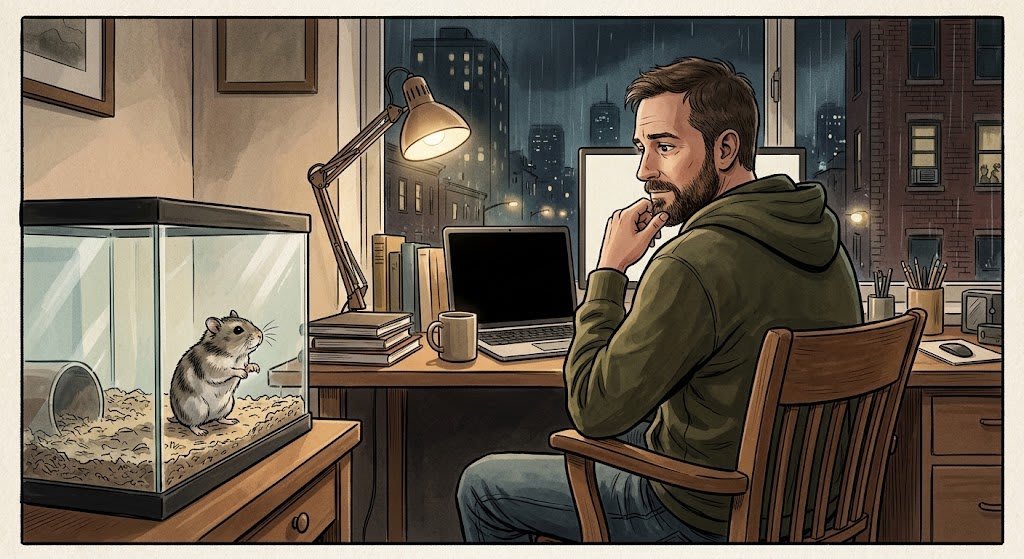
Most people don’t know that when writing the early drafts of “Dude, Where’s My Car?” I was heavily influenced by post-Kantian philosophers like Hegel and Schopenhauer. In fact, the first completed version of the script wouldn’t even be considered a comedy. It was originally more of a “Waiting for Godot” type philosophical back and forth between two characters questioning their place in the universe. Only after getting lost deep in the existential considerations regarding human consciousness and the meaning of life did I finally decide to go with the lighter, funnier version that eventually got made. In fact, the movie’s original title was “Dude, What is the Meaning of Life?”. In this chapter, we’re going to explore how the story of the film can be considered a metaphor to help understand the story of life.
So, two dudes spend the movie looking for their car, stumbling between comedy scenes, trying to order Chinese food, finding tattoos on their backs, and encountering a gang of people wearing bubble wrap jump suits. Most people who talk to me about the movie tend to point out which scene was their favorite. Where they laughed the hardest. What line of dialogue was the most memorable. What nobody has ever said to me is “I liked the movie, but while I was watching it I found I couldn’t enjoy it because the whole time I was thinking about when they were going to find the car.”
That’s because the point of the movie isn’t finding the car. The point of the movie is what happens during the journey to find the car. It’s the manifestation of that classic saying, “Life is the journey, not the destination.” I’ve heard this truism my whole life. I’m sure you have too. But many times we don’t really comprehend sayings like this until we experience moments that force us to embrace the deeper meaning behind them.
The idea of car-tharsis, meaning the process of releasing and thus providing relief from strong or repressed emotions, is central to talk therapy. Clients often seek therapy because of the effect of strong repressed emotions that cause or are affected by traumatic events in their lives. One goal of therapy is to uncover these strong emotions and let them out. The problems they cause might not be solved immediately, but clients often experience a great sense of relief after a realization like this has been achieved. In therapy sessions this concept of experiencing car-tharsis seems to always be present to some degree, from being actively explored to lying just below the surface. Therapy is very much about identifying, accepting, and releasing the strong emotions that guide our lives with an often times invisible hand.
Many people want to avoid situations that force them to embrace the kind of powerful emotions that get repressed. It’s our natural reaction, our default setting. Repression is one of the most common defense mechanisms we develop to protect ourselves from emotional and physical trauma. Put simply, we don’t want to think about things that make us feel bad. But these moments of car-tharsis find us no matter how much we try to avoid them, and often this happens towards the ends of our lives, just as it does towards the ends of movies. In movies this makes sense, because it wraps up the movie and then we leave the theater with whatever lessons we’ve learned and continue on with our lives. In real life this is less desirable. Why wait till the end of your life to experience something that could improve the quality of your life? The lesson here is, don’t spend your whole life running from hard moments that could lead to car-tharsis.
How else to apply the spiritual lessons of this cinematic classic to our lives? We can feel inspired to live in the moment, to recognize ourselves in the present and not be overly concerned with what will happen in the future or what went on in the past. Let your life be about enjoying the search for your own metaphorical car. The one certainty in life is that we will all eventually find our cars, and if you’ve been thinking about finding the car your whole life you will be underwhelmed at the end of the movie. You certainly don’t want to find your metaphorical car and then realize you wish you’d spent less time thinking about finding it and more time enjoying the time spent searching for it.
So after you finish this chapter, close the book and think about what makes you feel good in this moment, at this time in your life, at this point in your journey, during this scene in your own bio-pic. Focus on this moment and let yourself enjoy it without worrying about what is to come, or the choices you could have made in the past that might have led you to a different place in the present. Consider where you are right now your destination, and give yourself credit for reaching it. Because, as a wise man named Gautama Buddha once said, “You will find your happiness not in the finding of your car, but in the searching for it.”
Ready to take the first step towards clarity and strength?
Let’s connect—schedule your free consultation with me today!